
Biochar for soil health offers a promising way to improve certain soil properties, support nutrient management and help soil retain moisture. Unlike conventional fertilisers, which mainly supply nutrients, biochar works mainly as a soil amendment that can influence the physical, chemical and biological characteristics of soil. How well it works depends on the raw material, production method, soil type, application rate and local growing conditions.
Healthy soil is essential for productive agriculture, thriving gardens and sustainable food systems. Yet continuous cultivation, soil erosion, nutrient loss and declining organic matter can gradually reduce soil quality. These challenges, along with the wider shift towards organic farming in India, have encouraged farmers, researchers and gardeners to look for natural ways to improve soil structure. One material receiving growing attention is biochar, a carbon-rich substance produced from organic materials under controlled heating.
This guide covers what biochar is, how it is made, the main biochar benefits for soil, how to apply it step by step and the precautions worth knowing before you invest. Understanding how it works will help you decide whether biochar suits your land and how to use it responsibly.
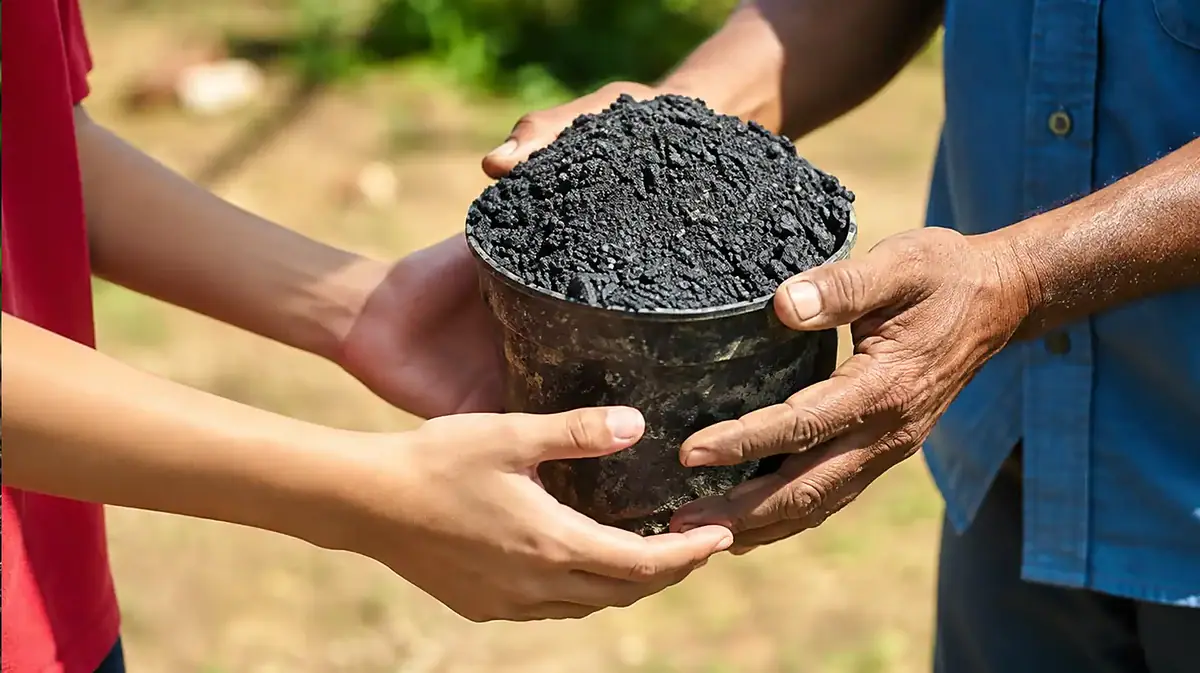
What Is Biochar? The Biochar Meaning Explained
The biochar meaning is straightforward: biochar is a stable, carbon-rich material produced by heating biomass, such as agricultural residues, wood waste or certain plant materials, in an environment with limited oxygen. This process is known as pyrolysis. The International Biochar Initiative defines it the same way: the solid material obtained when biomass is converted by heat in an oxygen-limited environment.
During pyrolysis, organic material undergoes thermal decomposition without burning completely. Much of its readily decomposable matter is transformed, leaving behind a porous material that contains relatively stable forms of carbon. That porous, stable structure is central to how biochar behaves once it is in the soil.
So what is the difference between biochar and charcoal? Biochar is specifically produced and selected for uses such as soil improvement, carbon storage and environmental management. Not every type of charcoal is appropriate for agricultural application, particularly when its feedstock or production conditions are unknown:
| Factor | Biochar | Ordinary Charcoal |
|---|---|---|
| Made for | Soil improvement, carbon storage, environmental use | Mainly fuel for cooking and heating |
| Feedstock | Suitable, known biomass | Often unknown or mixed |
| Production | Conditions chosen for soil use | Conditions chosen for burning |
| Testing | Should be tested for contaminants | Usually not tested for soil use |
| On the farm | Suitable once quality is verified | Not recommended |
How Is Biochar Made? Feedstocks and Pyrolysis
Biochar production starts with biomass, which is heated in a low-oxygen kiln or reactor until a porous, carbon-rich solid remains. Common feedstocks include:
- Crop residues: rice husks, straw and similar crop leftovers. Rice husk biochar turns a common milling by-product into a soil input.
- Wood chips: wood chips and suitable forestry residues from clean, untreated sources.
- Shells and by-products: nut shells and other agricultural by-products that would otherwise go to waste.
- Clean plant material: certain clean, untreated plant materials, never painted, treated or chemically contaminated wood.
The properties of the final product depend on the original biomass and on the temperature and duration of production. Together, these shape its porosity, pH, carbon content and capacity to interact with nutrients. For agricultural use, biochar should come from suitable feedstocks and be tested for relevant contaminants before application. Schemes such as the European Biochar Certificate set limits for heavy metals and polycyclic aromatic hydrocarbons (PAHs) according to how the biochar will be used.
If you are buying biochar in India, ask the supplier for feedstock details and test results before you place an order.
Why Biochar for Soil Health Matters
Soil health depends on more than the presence of nutrients. The USDA’s Natural Resources Conservation Service describes it as the continued capacity of soil to function as a living ecosystem that sustains plants, animals and people. Soil structure, water availability, biological activity and the ability to support plant roots all contribute to healthy growth.
In some soils, repeated cultivation and inadequate replacement of organic matter lead to compaction, poor water retention, nutrient losses and reduced biological activity. Biochar can help address some of these problems by modifying the soil environment. Using biochar for soil health makes most sense when you want to improve soil properties over time rather than rely only on short-term nutrient inputs.
It is not a universal solution, though. Its benefits are often more noticeable in degraded, acidic, sandy or nutrient-poor soils than in soils that are already fertile and well managed:
| Soil Condition | Where Biochar May Help | What to Watch |
|---|---|---|
| Sandy, fast-draining | Holding moisture for longer between watering | Results vary by feedstock; keep checking moisture |
| Heavy or compacted | Aggregation and conditions for root growth | Pair with compost and less soil disturbance |
| Acidic | Raising pH with higher-pH biochars | Too much can make soil too alkaline |
| Degraded or nutrient-poor | Nutrient retention and biological activity | Not a complete fertiliser; add nutrients |
| Fertile, well managed | Benefits are often less noticeable | Trial a small area before buying in bulk |
That is why biochar in agriculture works best as one part of a wider soil plan rather than as a stand-alone fix.
Key Biochar Benefits for Soil Improvement
1. Improving Soil Structure
One of the most important biochar benefits is its potential to improve soil structure. Many biochars contain a network of pores that influence how soil particles fit together and how air and water move through the soil. In heavy soils, suitable biochar may help improve aggregation and support root growth. In sandy soils, it may improve moisture retention and ease some of the limits of rapid drainage.
A meta-analysis of 82 studies published in Geoderma found that biochar lowered soil bulk density by about 9% on average, a sign of less compacted soil. Results still depend on particle size, application rate and the existing soil, so biochar should sit alongside compost application, mulching and reduced soil disturbance.
2. Supporting Soil Fertility
Soil fertility depends on the availability of essential nutrients, including nitrogen, phosphorus and potassium. Biochar can influence nutrient availability through its surface properties and its interactions with soil minerals and organic matter. Some biochars retain positively charged nutrients, reducing their movement through the soil under suitable conditions. This may improve nutrient-use efficiency and help plants access nutrients over time.
Biochar itself is not necessarily a complete fertiliser. Its nutrient content varies with the feedstock and production process, and some products contain little immediately available nutrition. It is more useful as part of a balanced soil fertility programme that includes appropriate fertilisers, compost or other sources such as fermented organic manure. Our guide to organic manures explains those options.

3. Increasing Water Retention in Soil
Water availability is a major concern for agriculture, particularly in areas with irregular rainfall or long dry spells. Because many biochars are porous, they hold water within their internal structure and influence how moisture moves through soil. In suitable conditions, this can support water retention in soil and keep moisture available for longer between watering or rainfall.
The effect varies considerably. The same meta-analysis found that biochar generally increased plant-available water in coarse and medium-textured soils but decreased it in fine-textured soils, and biochar from different feedstocks holds water differently. So don’t assume it will automatically reduce irrigation needs; keep monitoring soil moisture and adjust irrigation to what the crop needs.
4. Supporting Beneficial Soil Microorganisms
Healthy soil contains diverse microorganisms, including bacteria and fungi that drive nutrient cycling and the decomposition of organic matter. Biochar’s porous structure provides small spaces where some microorganisms can establish themselves, and its effects on soil pH, moisture and nutrient availability can also influence microbial activity.
Over time, these changes may create a more supportive environment for soil organisms, although the response depends on the product, existing soil conditions and the organic matter and nutrients available. That is why combining biochar with mature compost or vermicompost works well: compost supplies nutrients and organic compounds while supporting biological activity.
Biochar as a Soil Amendment
A soil amendment is a material added to soil to improve its physical, chemical or biological properties. Biochar fits this category because its primary role is often to modify the soil environment rather than provide an immediate supply of nutrients. As a soil amendment, it works best as part of a broader soil management strategy.
For example, a farmer with sandy soil may use a suitable biochar to support moisture retention, add compost to build organic matter and supply nutrients according to soil-test results. Ecotrails Growme’s Pure Biochar is a carbon-rich, highly porous soil amendment made for exactly this kind of use.
In acidic soils, certain biochars with a higher pH may help raise soil pH, but the effect depends on the product’s properties and the soil’s existing acidity. Excessive application can make some soils too alkaline and reduce the availability of certain nutrients. Before applying biochar on a large scale, test the soil and understand the product’s composition.
Application of Biochar: 5 Steps for Better Results
Correct application matters, because untreated or unsuitable biochar may not deliver the expected benefits. Fresh biochar can initially interact with nutrients in ways that affect their availability, depending on the material and soil conditions. A practical approach involves these steps.
Step 1: Test the Soil
Assess soil pH, nutrient levels and organic matter where testing is available, so you know the actual problem that needs attention. In India, the government’s Soil Health Card scheme tests 12 soil parameters and gives fertiliser recommendations.
Step 2: Choose a Suitable Product
Select biochar intended for agricultural or horticultural use, and check its feedstock, pH, nutrient characteristics and contaminant data. Avoid products made from painted, treated or chemically contaminated wood and other unsuitable materials.
Step 3: Charge or Condition the Biochar
Mix biochar with mature compost or another suitable nutrient source before application, so it takes up nutrients and moisture before it enters the soil. This process, often called charging, reduces the risk of fresh biochar temporarily affecting nutrient availability. Biochar Green combines biochar and vermicompost in one.
Step 4: Apply at an Appropriate Rate
There is no single application rate suitable for every soil; the right quantity depends on soil type, crop requirements, biochar properties and your goal. Start with a small trial area and compare it with an untreated area under similar conditions.
Step 5: Incorporate and Monitor
Mix the biochar into the upper soil layer according to agricultural guidance, avoiding excessive disturbance around established roots. Monitor plant growth, soil moisture and crop performance across full growing periods, because biochar’s effects can develop gradually.

Follow the manufacturer’s recommendations on charging and rates. Results shared by other growers, such as our farmer testimonials, show what is possible, but your own trial plot is the real test.
Is Biochar an Organic Soil Conditioner?
Biochar can function as an organic soil conditioner because it is produced from biomass and can improve certain soil properties. However, the word “organic” does not automatically guarantee that every product is safe or suitable for agriculture.
Its quality depends on the original feedstock, the production process and the testing standards behind it. Products made from contaminated materials may introduce unwanted substances into the soil, so treat feedstock details and test results as part of the product, not an optional extra. A trustworthy organic soil conditioner should come with that information.
Biochar vs Compost: Why They Work Better Together
Biochar also differs from compost. Compost supplies decomposable organic matter and nutrients, while biochar generally contains more stable carbon and decomposes much more slowly. The two complement each other:
| Factor | Compost or Vermicompost | Biochar |
|---|---|---|
| What it supplies | Decomposable organic matter and nutrients | Mostly stable carbon; often little immediate nutrition |
| How fast it breaks down | Relatively quickly | Slowly; some carbon can last decades or longer |
| Main job in soil | Feeds plants and soil organisms | Helps hold some nutrients and moisture |
| Best way to use it | Regularly, to replenish organic matter | As a long-term amendment, charged with compost first |
Compost contributes nutrients and supports soil organisms, while biochar may help retain some of those nutrients and moisture. Used appropriately, the combination supports longer-term soil management. To understand the compost side better, read our vermicompost guide.
Environmental Benefits of Biochar
Beyond agriculture, biochar has attracted interest because it can contribute to carbon storage. During pyrolysis, a portion of the carbon originally present in biomass is converted into relatively stable forms. When suitable biochar is incorporated into soil, some of this carbon can remain stored for extended periods, although its stability varies with production conditions and the environment.
A widely cited study in Nature Communications estimated that, at its maximum sustainable potential, biochar could cut net greenhouse gas emissions by up to 12% of current human-caused emissions each year, but only with low-emission production and sustainably sourced feedstock.
Biochar production can also offer a useful route for crop residues that would otherwise be discarded or burned in the open. In parts of India where crop stubble is still burned after harvest, this is one of the most practical uses of biochar. The real environmental benefit, however, depends on responsible feedstock sourcing, efficient production, transport and how the biomass would otherwise have been used.
Biochar should not be treated as automatically carbon-negative. A full assessment needs to consider emissions from production, energy use, transport and land management.
Biochar Limitations and Precautions
Although biochar has real potential, it is important to understand its limitations before investing in large quantities:
- Variable performance: different products can produce different results in the same soil.
- Initial costs: purchase, transport and application can be expensive, particularly for large farms.
- Possible nutrient imbalance: certain products may alter pH or temporarily influence nutrient availability.
- Product contamination: poorly produced biochar may contain undesirable substances.
- Need for monitoring: benefits depend on soil conditions and appropriate management.
Before relying on biochar for soil health across a whole farm, run a small field trial supported by soil testing to see whether it offers practical value.
Biochar for Soil Health: The Bottom Line
Biochar offers a useful option for improving selected soil properties when it is produced responsibly and applied according to local conditions. Its potential benefits include improved soil structure, support for soil fertility, better water retention in soil and a more favourable environment for certain microorganisms.
However, biochar is not a replacement for compost, balanced fertilisation or sound agricultural practices; its performance depends on the product, soil characteristics, crop requirements and application method. For farmers and gardeners considering biochar for soil health, the most sensible approach is to begin with soil testing, choose a suitable product and evaluate results through small trials.
Combined with careful nutrient management and other soil conservation practices, biochar can contribute to a more sustainable way of keeping soil productive. For more practical guides, explore our Resources & Knowledge Centre.
Frequently Asked Questions (FAQs)
What is biochar used for in agriculture?
Biochar is used as a soil amendment to improve certain soil properties, support nutrient management, influence water retention, and contribute to long-term carbon storage.
Does biochar improve soil fertility?
It can support soil fertility by influencing nutrient retention and soil conditions. However, it does not always provide sufficient nutrients on its own and may need to be combined with compost or fertilisers.
Can biochar help soil retain water?
Yes, some types of biochar can improve water retention in soil. The extent of improvement depends on the biochar’s properties and the soil type.
Should biochar be mixed with compost?
Mixing biochar with mature compost can help condition it before application. This combination also brings together the nutrient contribution of compost and the longer-lasting properties of biochar.
Is biochar suitable for every type of soil?
No. Its effectiveness varies according to soil texture, pH, fertility, and the biochar product. Soil testing and small-scale trials can help determine its suitability.
How long does biochar last in soil?
Some of its carbon can remain in soil for decades or longer, depending on its properties and environmental conditions. Its effects on soil fertility and moisture vary and should be monitored over time.
Ready to Try Biochar on Your Soil?
Ecotrails Growme makes Pure Biochar and Biochar Green for farmers and gardeners who want healthier, more productive soil. Start with a trial plot, see how your soil responds, then scale up.
Buy Retail or Wholesale Talk to Us
Pingback: How to Improve Soil Fertility Naturally: 7 Proven Methods
Pingback: Biochar for Home Gardening: 5 Steps for Pots & Garden Beds
Pingback: Biochar vs Compost: 7 Difference & the Best Way to Use Both
Pingback: Water Retention in Soil: How Biochar Helps in 5 Easy Steps
Pingback: Carbon Sequestration in Agriculture: 4 Proven Soil Practices
Pingback: Pure Biochar for Agriculture: 5 Benefits,& Bulk Supply Guide
Pingback: Ecotrails Growme Soil Solutions: Best guide 2026